


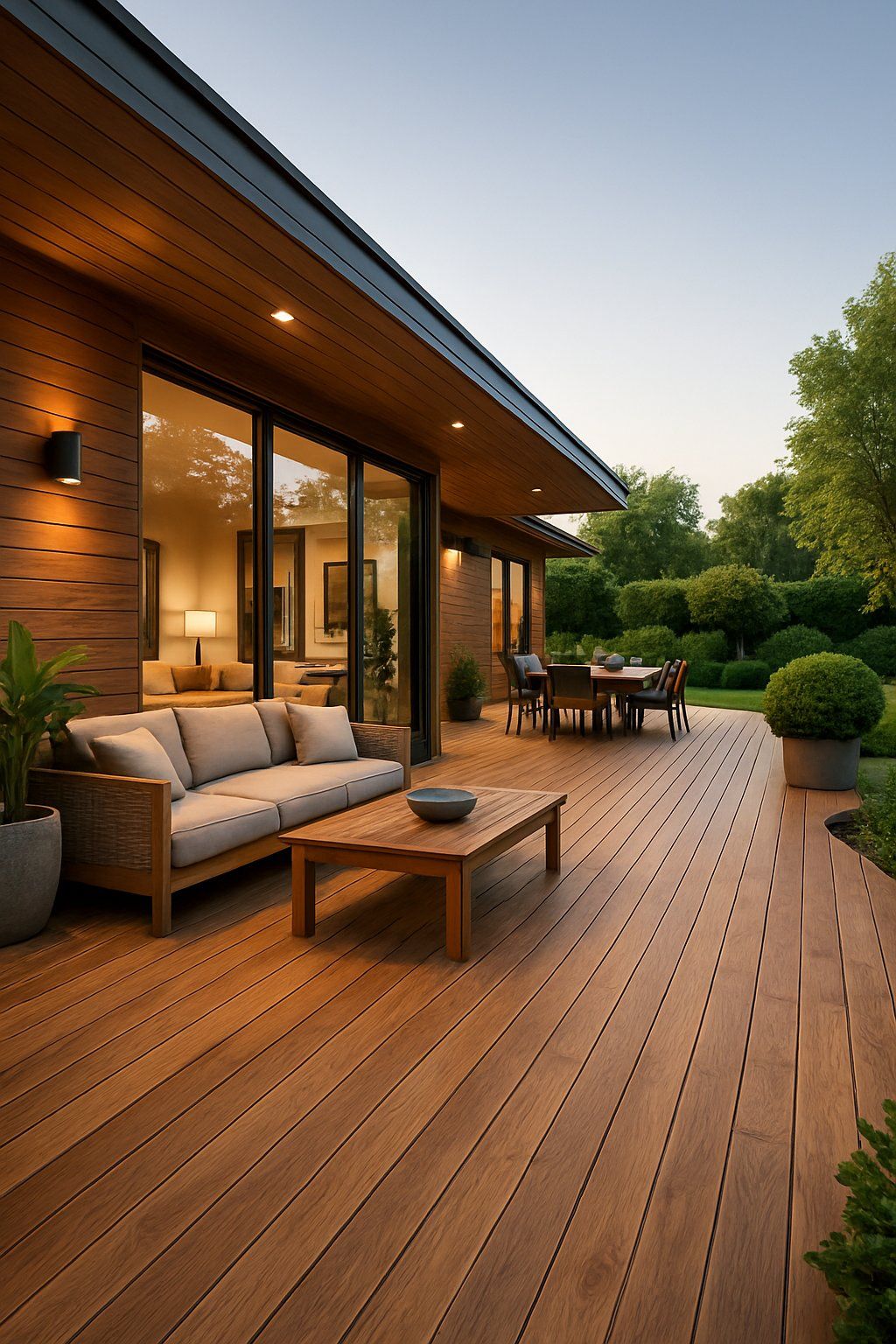
The extension of the domestic narrative into the exterior requires a rigorous assessment of materials capable of withstanding the harsh variables of the outdoor environment. In India, these variables include intense UV radiation, significant seasonal rainfall, and extreme temperature fluctuations. The selection of decking material—whether natural, composite, or synthetic—is a decision that impacts the longevity and usability of outdoor living spaces such as balconies, terraces, and poolsides.
Natural Wood Decking: The Prestige of Ipe, Teak, and Cedar
Natural wood remains the aesthetic benchmark for outdoor decking. Tropical hardwoods like Ipe and Teak are prized for their extreme density and inherent resistance to rot and insects. Ipe, for instance, is so dense it often carries a fire rating similar to concrete and can last 40 years or more with proper maintenance.
Softwoods like Cedar and Redwood offer a different value proposition. Cedar is naturally rot-resistant due to its high levels of tannins and oils, providing a chemical-free alternative to pressure-treated lumber. While these woods are “soft” and may scratch or dent more easily than hardwoods, they offer a traditional rustic beauty and a unique scent that synthetic materials cannot replicate. However, all natural wood decks will weather to a silver-gray patina over time unless they are regularly stained and sealed to protect against UV damage.
Synthetic Solutions: Wood Plastic Composites (WPC) and PVC
For many homeowners, the goal of an outdoor deck is to create a “maintenance-free” sanctuary. This has driven the growth of Wood Plastic Composites (WPC) and PVC decking. WPC is a blend of recycled wood fibers and plastics, offering a material that does not warp, splinter, or rot. Capped composites—which feature a protective polymer shell—are particularly resistant to the mold, staining, and fading that can occur in the humid coastal regions of India.
PVC decking, made from 100% synthetic plastic, provides the highest level of moisture resistance. It is virtually immune to the effects of heavy rainfall and constant water exposure, making it the ideal material for poolside applications where chlorine and water pooling are present. While PVC might not offer the exact tactile sensation of real wood, modern manufacturing has enabled a variety of wood-grain finishes that mimic natural textures.
Modified Wood and Sustainable Innovation
The emergence of “modified wood” (such as Kebony) offers a middle ground between natural beauty and industrial performance. Through a non-toxic liquid treatment, sustainable softwoods are modified at the cellular level to become as dense and durable as tropical hardwoods. This creates a material that is moisture-resistant, pest-resistant, and maintenance-free, aging to a stunning silver-gray while maintaining its structural integrity in essentially any climate.